
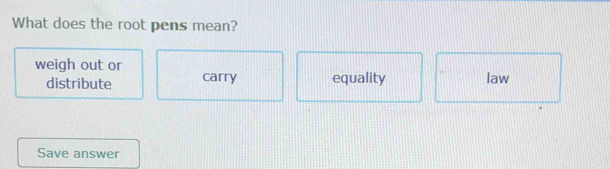
The root “pens,” often encountered in the labyrinthine corridors of etymology, unveils a captivating saga extending far beyond the mundane act of wielding a writing instrument. It’s a linguistic seed, germinating into a diverse array of words each subtly reflecting the core concept of weight, consideration, and recompense. Let’s embark on an exploration of its multifaceted meanings.
The Literal Weight: Measuring and Assessing
At its most fundamental level, “pens” is inextricably linked to the concept of physical weight. Consider the word “pendulum,” a device whose very essence hinges on gravitational pull, a rhythmic dance dictated by the earth’s embrace. The pendulum’s measured swing, a testament to the balanced forces acting upon it, provides a tangible example of “pens” in its most elemental form. Similarly, “pendant,” an adornment suspended from a chain or necklace, derives its character from the downward pull, the weight it carries. The weight is fundamental to both the function and definition.
The term “pound,” a unit of weight measurement, traces its ancestry back to this selfsame origin. The historical significance of weight in trade and commerce underscores the gravitas (pun intended) that “pens” carries, a responsibility for accurately quantifying value. Think also of “ponder,” a verb connoting deep thought and consideration. We “ponder” weighty matters, mentally weighing options and assessing their potential consequences. The connection becomes quite clear.
The Figurative Weight: Consideration and Judgement
Beyond the tangible realm of physical measurement, “pens” extends its influence into the more abstract domain of judgment and evaluation. “Compensate,” for example, speaks to the act of redressing an imbalance, of providing restitution to rectify a perceived wrong. It suggests a careful assessment of the damages incurred, followed by an appropriate rendering of amends. The balancing of scales, a figurative weighing of rights and wrongs, is central to this concept.
“Expense,” an expenditure of resources, whether financial or otherwise, evokes the notion of a cost to be borne, a burden to be shouldered. The careful management of expenses, a cornerstone of prudent financial planning, demands a constant weighing of potential benefits against their corresponding costs. Similarly, “expensive” denotes something of considerable value, something that demands a significant outlay of resources. The implication is that such expenditure is warranted by the inherent worth of the item or service in question.
Furthermore, consider the verb “to suspend,” which can mean to temporarily halt or interrupt an activity. This act often involves a careful weighing of the potential risks and benefits of continuing, a deliberate deferral of action until such time as a more informed decision can be made. It’s a pause for evaluation, a moment of considered judgment.
The Legal Weight: Law and Justice
The legal system, a framework designed to ensure fairness and equity, provides fertile ground for exploring the nuances of “pens.” “Penal,” referring to punishment or penalties imposed for violations of the law, speaks directly to the consequences of actions deemed unacceptable by society. The imposition of penalties, a process ideally guided by reason and justice, requires a careful weighing of the severity of the offense and the appropriate level of retribution. It’s about maintaining social equilibrium, ensuring the scales of justice remain balanced.
The term “penitentiary,” a place of confinement for those convicted of crimes, further underscores the punitive aspect of “pens.” The act of incarceration, a removal of freedom, represents a significant societal judgment, a weighing of the individual’s transgressions against the collective good. The system of incarceration, hopefully designed for rehabilitation, is another example of “pens” at play.
Promises a Shift in Perspective
By recognizing the profound influence of “pens” on our language, we gain a renewed appreciation for the subtle ways in which concepts of weight, consideration, and recompense permeate our thoughts and actions. It challenges us to contemplate the inherent biases that shape our judgments and to strive for a more balanced and nuanced understanding of the world around us. It’s an invitation to weigh our own actions and their consequences with greater circumspection.
Piquing Curiosity
The journey through the semantic landscape of “pens” is far from exhaustive. Further exploration reveals even more intricate connections and subtle shades of meaning. For instance, consider words like “penchant” (a strong liking or inclination) or “impenetrable” (incapable of being pierced or understood). These seemingly disparate terms, upon closer inspection, reveal subtle echoes of the underlying concept of weight or resistance. Delving deeper into etymology offers a tantalizing glimpse into the rich tapestry of language, a testament to the enduring power of words to shape our understanding of reality. The exploration into word origins never ends.






Leave a Comment