
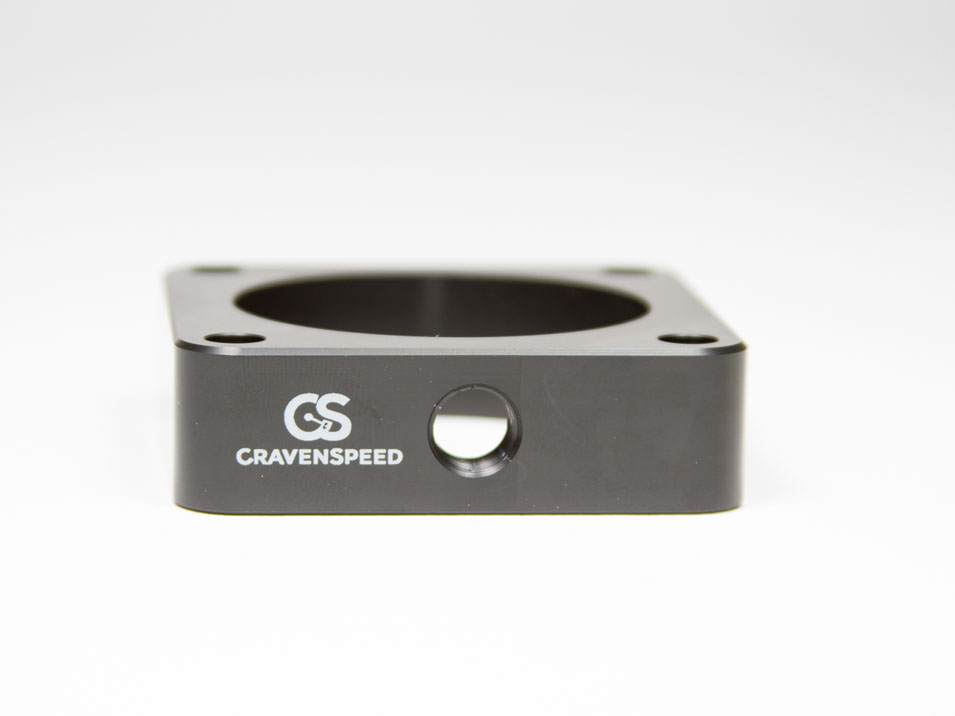
The throttle body spacer, a seemingly simple component nestled between the throttle body and the intake manifold, often elicits a mixture of curiosity and skepticism. What exactly does this unassuming ring of metal or composite do? The answer, while multifaceted, revolves around influencing airflow dynamics and, consequently, engine performance. Its proponents claim gains in horsepower and fuel economy, while detractors dismiss it as a mere placebo effect. This discrepancy fuels ongoing debate and warrants a closer examination of the spacer’s purported functions.
Enhancing Airflow Dynamics: A Vortex of Possibilities
At its core, the throttle body spacer aims to improve airflow into the engine. Many designs incorporate a helical or spiral pattern within the spacer’s bore, intending to induce a swirling motion in the incoming air. This swirling action, often referred to as a vortex, is theorized to promote better atomization of fuel and more complete combustion within the cylinders. More complete combustion, in turn, leads to increased power output and improved fuel efficiency.
The premise rests on the idea that turbulent airflow is more conducive to fuel vaporization than laminar flow. By creating a vortex, the spacer attempts to break up fuel droplets, ensuring they mix more thoroughly with the air before entering the combustion chamber. This enhanced mixing is particularly relevant in older engines or those with less sophisticated fuel injection systems, where fuel atomization might be less than optimal.
However, the effectiveness of this swirling action is heavily debated. Some argue that the induced turbulence is minimal and quickly dissipates within the intake manifold, rendering its impact negligible. Others maintain that even a slight improvement in atomization can translate into measurable performance gains, particularly at lower engine speeds.
Addressing Thermal Considerations: Insulation and Heat Soak
Another function attributed to throttle body spacers, particularly those constructed from insulating materials like phenolic resin, involves mitigating heat transfer from the engine to the throttle body. The engine, during operation, generates a substantial amount of heat. This heat can radiate outwards and warm the throttle body, potentially leading to increased intake air temperatures. Elevated intake air temperatures reduce air density, which in turn, can diminish engine performance.
An insulating throttle body spacer acts as a thermal barrier, reducing the amount of heat transferred to the throttle body. By keeping the throttle body cooler, the spacer helps maintain lower intake air temperatures, thereby preserving air density and potentially boosting horsepower. This effect is more pronounced in hot climates or during demanding driving conditions where the engine is under significant load.
Furthermore, some spacers address the phenomenon of “heat soak.” After the engine is switched off, residual heat can build up in the engine bay, further raising the temperature of the throttle body. This heat soak can make the engine more difficult to start, as the hot throttle body can vaporize fuel within the intake manifold, leading to a rich starting condition. An insulating spacer can help prevent this heat soak, ensuring easier starts, particularly in hot weather.
Intake Manifold Plenum Volume and Resonance
The addition of a throttle body spacer effectively increases the plenum volume of the intake manifold. The plenum is the reservoir of air that feeds the engine’s cylinders. By increasing its volume, the spacer can potentially alter the intake manifold’s resonant frequency. Intake manifold resonance is a phenomenon where pressure waves within the manifold are tuned to enhance cylinder filling at specific engine speeds. Altering the plenum volume can shift this resonant frequency, potentially optimizing performance within a different rpm range.
However, the impact of a throttle body spacer on intake manifold resonance is complex and depends heavily on the engine’s specific design. A small increase in plenum volume may have a negligible effect, while a larger increase could noticeably shift the resonant frequency, potentially improving torque at certain rpms while sacrificing it at others. Careful dyno testing is often necessary to determine the optimal spacer thickness for a given engine.
Application-Specific Considerations: Not a Universal Solution
The effectiveness of a throttle body spacer is highly dependent on the specific vehicle and engine application. Older engines with carburetor or throttle body injection systems may benefit more from the improved fuel atomization provided by a spacer than newer engines with direct injection, which already exhibit excellent fuel atomization. Similarly, engines with restrictive intake manifolds may see a greater benefit from the increased plenum volume than those with already optimized manifolds.
In some cases, a throttle body spacer may even have a detrimental effect on performance. For example, on engines with highly tuned intake manifolds, the addition of a spacer could disrupt the carefully engineered airflow dynamics, leading to a decrease in power. The fitment of a spacer may also necessitate adjustments to the throttle cable or other engine components, which can introduce additional complications.
Ultimately, the decision of whether or not to install a throttle body spacer should be based on a thorough understanding of the engine’s characteristics and the specific goals of the modification. While some applications may see measurable improvements in horsepower and fuel economy, others may experience little to no discernible difference. Careful research and, ideally, dyno testing are essential to determine the true impact of a throttle body spacer in any given scenario.






Leave a Comment